Vaginal health depends heavily on a bacterial ecosystem called the vaginal microbiome. In most women, a healthy vaginal pH is between 3.8 and 4.5. That acidity is what discourages the overgrowth of yeast and the bacteria involved in bacterial vaginosis. Diet is one of several factors that influence this system, alongside hormones, medications, and hygiene habits.
Food is not a cure for infections, and no eating plan replaces treatment when something is wrong. But several connections between diet and vulvar and vaginal health are well supported, and a few popular claims are not.
Blood Sugar Is the Strongest Link
The clearest diet connection is glucose control. Poorly controlled diabetes is an established risk factor for recurrent yeast infections, because elevated blood sugar creates favorable conditions for Candida overgrowth. If you are getting yeast infections repeatedly, screening for diabetes is a reasonable step.
For women without diabetes, the evidence that blood sugar alone causes yeast infections is much weaker than the internet suggests. Still, meals built around fiber, protein, and healthy fats keep blood sugar steadier than meals built around refined carbohydrates, and that is worth doing for many reasons.
Probiotic and Fermented Foods
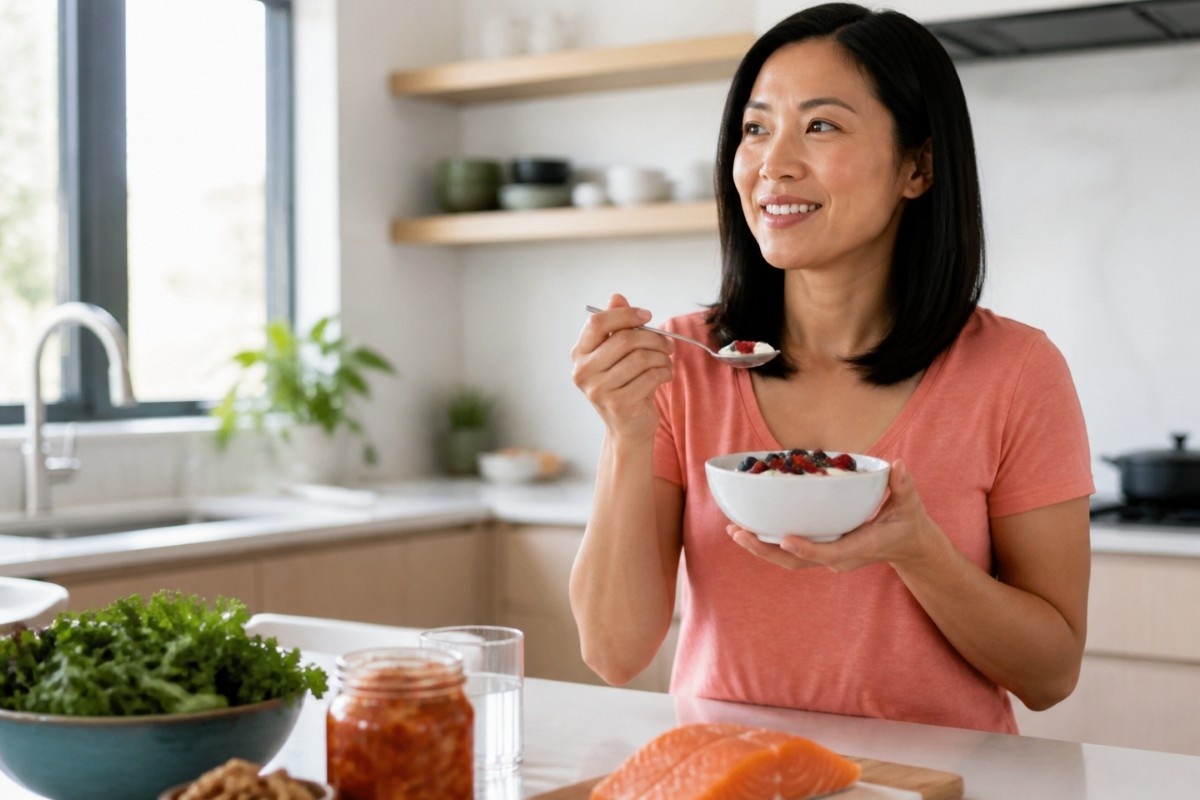
Yogurt with live active cultures, kefir, sauerkraut, kimchi, miso, and tempeh supply Lactobacillus species to your gut. Research on whether oral probiotics prevent bacterial vaginosis and yeast infections is promising but not conclusive, and results vary by strain. Some women find a clear benefit and others notice nothing.
That makes fermented foods worth including rather than worth counting on. If you are prone to recurrent infections, talk with your provider about strains with actual data behind them instead of picking a supplement off a shelf.
Fiber, Hydration, and Tissue Support
Fiber does two useful things. It supports regular bowel movements, and chronic constipation contributes to pelvic floor strain and discomfort. It also plays a role in how your body clears estrogen through the gut. Aim for vegetables, fruit, beans, and whole grains across the day rather than one large salad.
Water matters for mucous membranes throughout your body, including vaginal tissue, and it dilutes urine, which helps with bladder irritation. There is no magic number, and pale yellow urine is a good practical target.
A few nutrients support the tissue itself:
- Omega-3 fats from salmon, sardines, walnuts, and flaxseed, which help regulate inflammation
- Vitamin D, which is involved in immune function
- Iron, particularly if you have heavy periods, since iron deficiency is frequently missed
- Vitamin A, vitamin C, and zinc from produce, nuts, and lean protein, which support skin and mucosal repair
Cranberry deserves a specific mention. Compounds in cranberry may help prevent recurrent urinary tract infections in some women, but cranberry does not treat an active infection and does not address yeast or bacterial vaginosis.
What Does Not Work
Douching disrupts the microbiome and raises the risk of infection. Vaginal steaming, “detox” products, and inserting garlic, yogurt, or essential oils into the vagina as treatment are not supported by evidence and can cause irritation or burns. Boric acid does have real evidence for recurrent bacterial vaginosis, but only as a prescribed vaginal suppository under medical guidance. It is toxic if swallowed.
Heavy alcohol use and smoking both work against vaginal health, and smoking is independently linked to bacterial vaginosis and to persistence of HPV.
A Realistic Day of Eating
Greek yogurt with berries and ground flaxseed for breakfast. A grain bowl with salmon, leafy greens, chickpeas, and olive oil for lunch. An apple with almonds in the afternoon. Stir-fried vegetables with tofu or chicken and brown rice for dinner, with kimchi on the side if you like it. Water through the day.
That is it. No elimination plan, no supplement stack.
When Food Is Not the Answer
Some symptoms need evaluation regardless of how well you eat. See a provider for unusual discharge, a strong or fishy odor, itching or burning that does not resolve, pain with sex, sores, or infections that keep returning. Vaginal dryness after menopause is caused by declining estrogen, and while nutrition supports overall tissue health, treatments like local estrogen therapy or laser therapy address the actual cause.
The Ob-Gyn Center in Las Vegas integrates wellness and nutrition counseling with gynecologic care, and offers treatment for vaginal infections, vaginal dryness, and menopausal symptoms, including MonaLisa Touch. Call (702) 978-8900 or schedule an appointment at lasvegasobgyncenter.com to talk through what is happening and what will actually help.